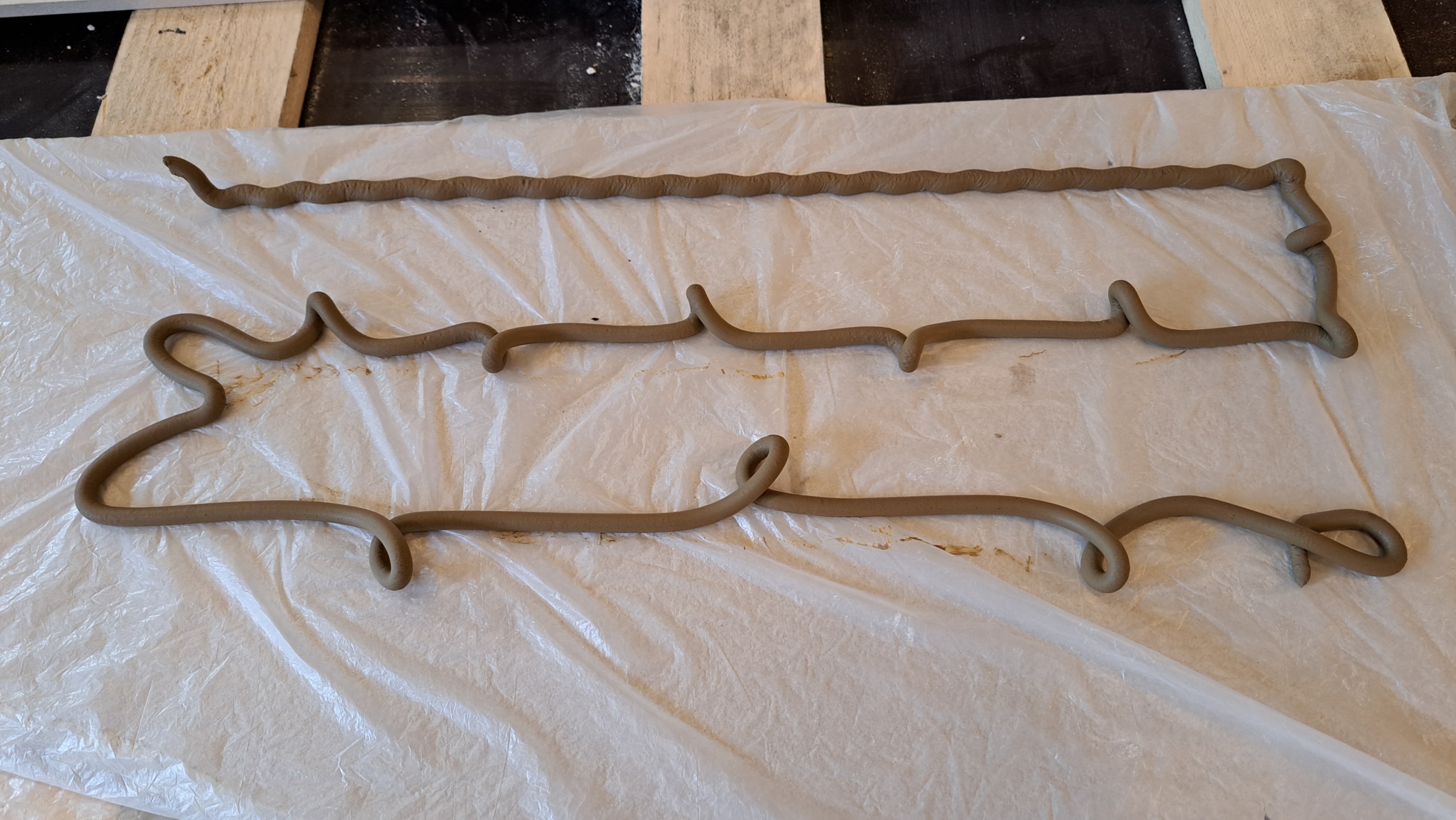
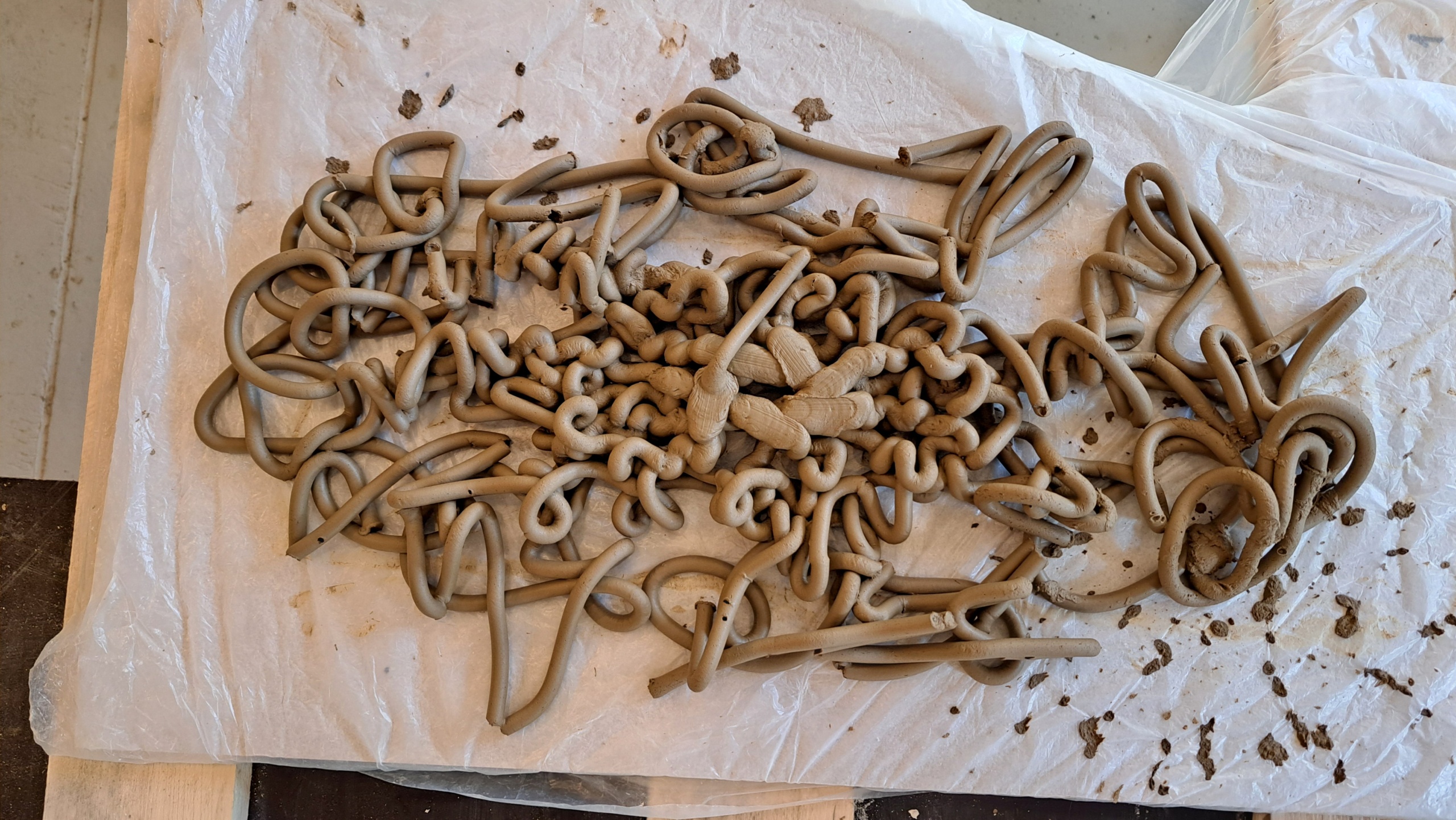
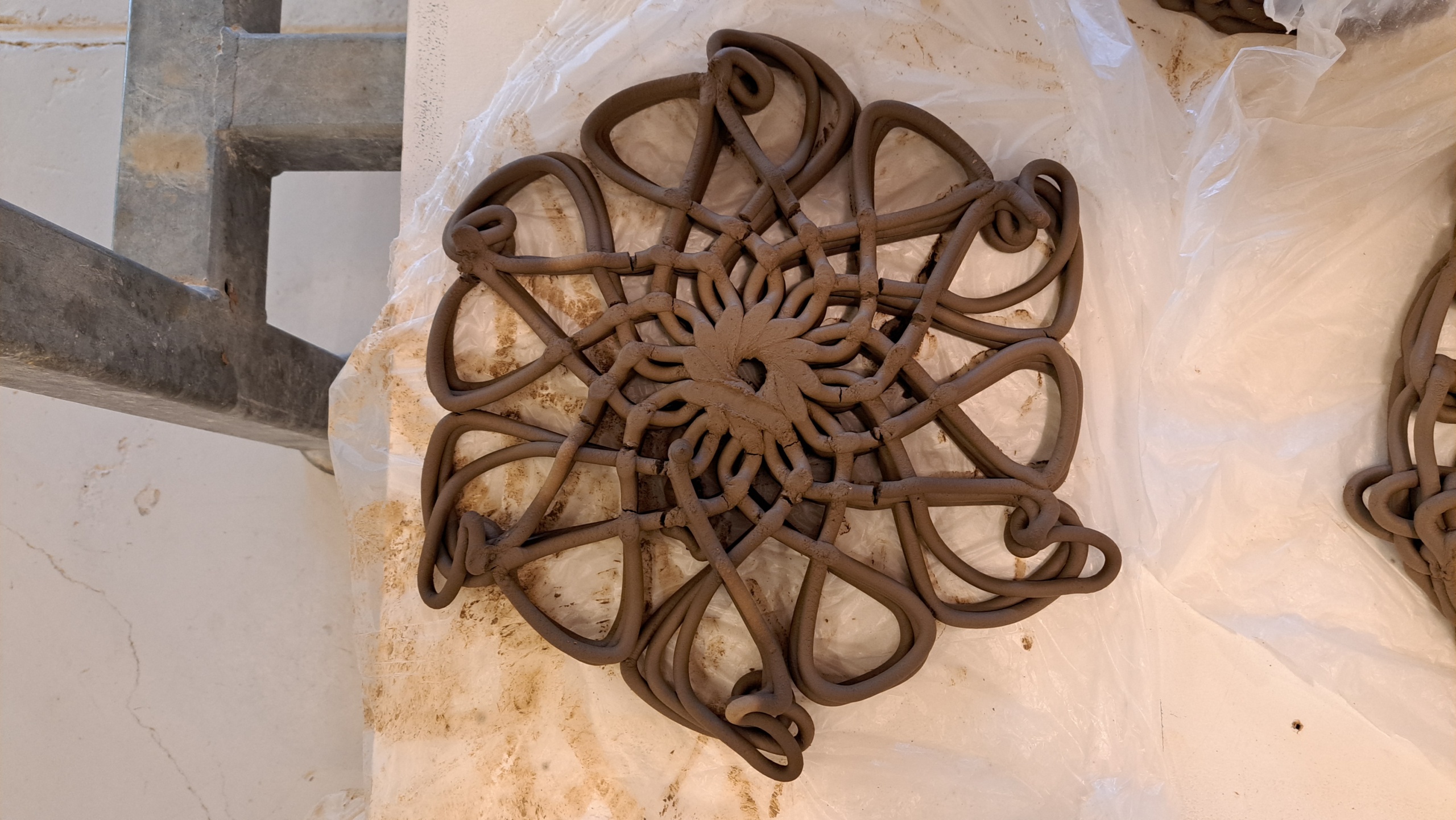
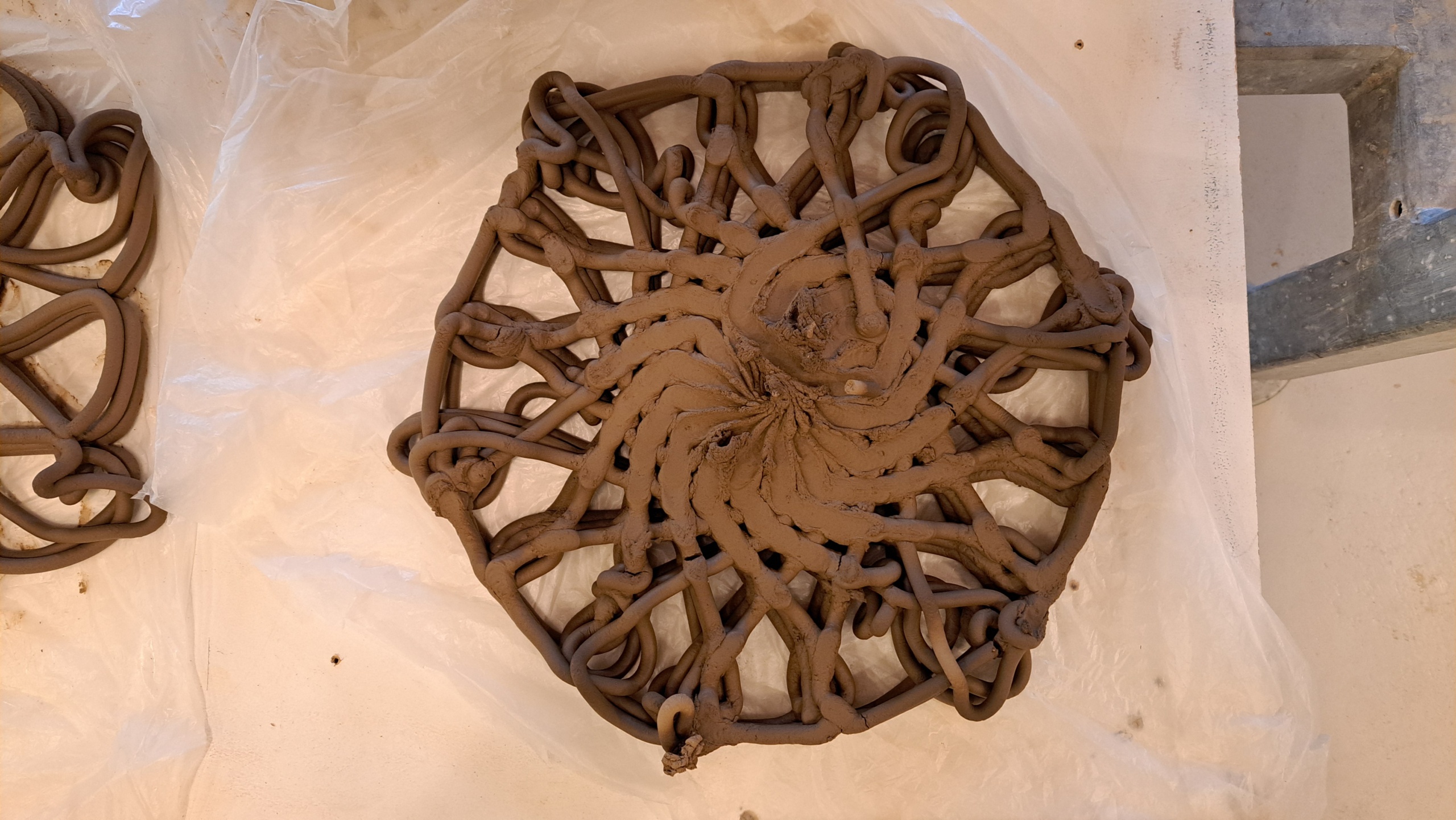
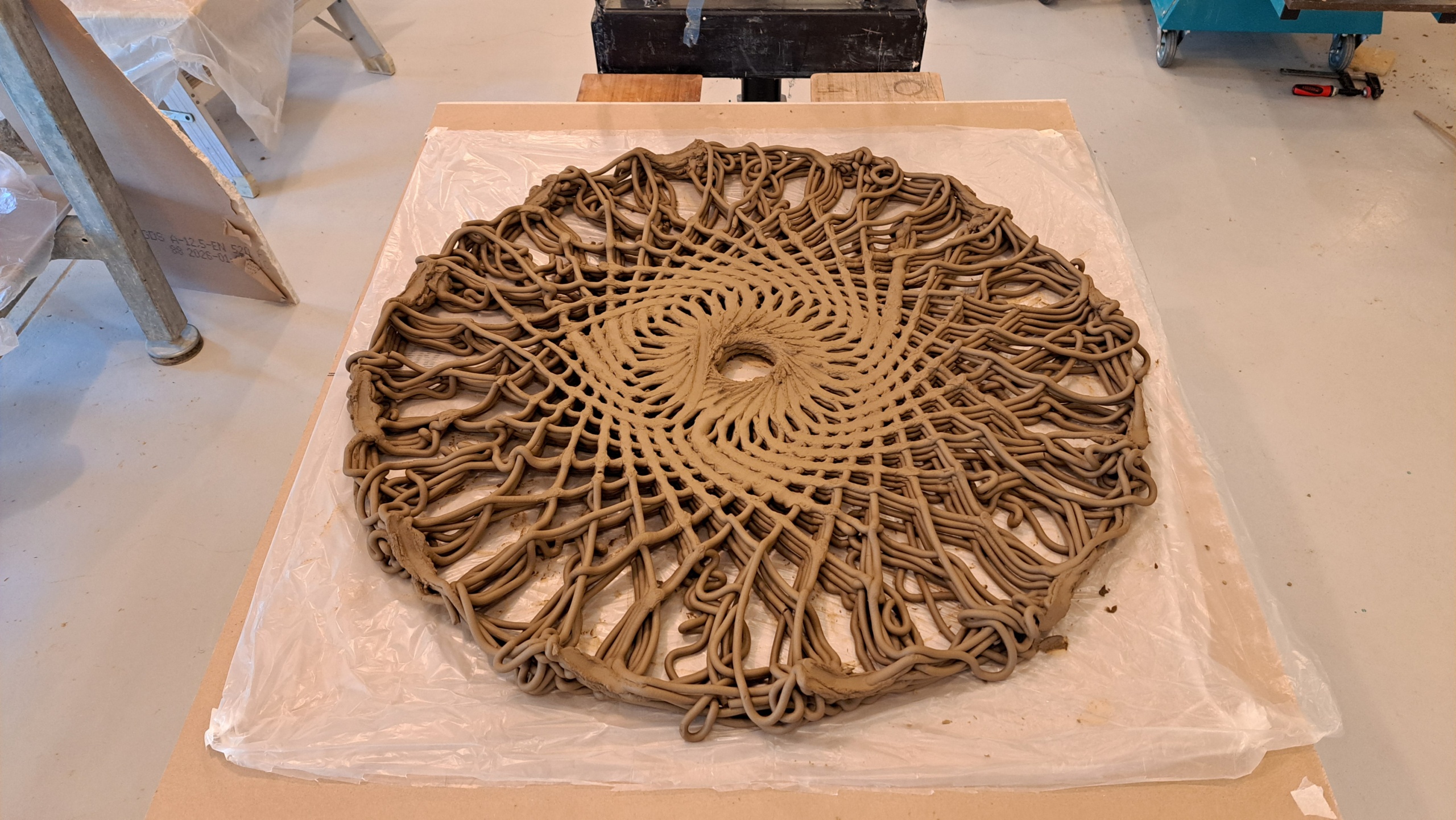
In the large ceramic workshop, Flemming Tvede Hansen, focused on 3D clay printed patterns using a robotic arm. The complexity and precision of digital technology interact with the clay’s plastic properties through gravity and pressure. The aim is to create a dynamic interplay between machine-driven, mathematical expression and the material’s sensory, tactile qualities.
June 2026
The patterns are developed through programming in Rhino and its visual scripting interface, Grasshopper. A parametric setup is used, meaning that parameters for patterns are designed rather than fixed outcomes. These parameters can easily be adjusted, allowing variations to be generated for specific purposes.
While the parametric system enables high complexity, the key interest lies in how clay actively influences the result. Clay 3D printing essentially uses a coil extrusion process, building forms layer by layer. The extruder follows digitally programmed paths that can produce highly precise and complex patterns, including intersecting trajectories. Due to clay’s plasticity, the material itself contributes to shaping the final outcome during printing.
This is explored through two experimental approaches:
- Gravity: Patterns are typically built layer-by-layer on a flat surface. By designing three-dimensional paths and printing on virtual curved surfaces, unsupported sections allow the clay to sag and deform, adding new curves to the final object.
- Pressure: Reducing layer height compresses areas with dense intersections into blurred masses, contrasting with more open areas where precision and complexity remain clearly visible.
The residency at SVFK aims to scale up these experiments, where the precision and complexity of 3D printing are dynamically enriched by the vitality and sensory qualities of clay.